Pregnancy Meditation App for Every Week of Your Journey
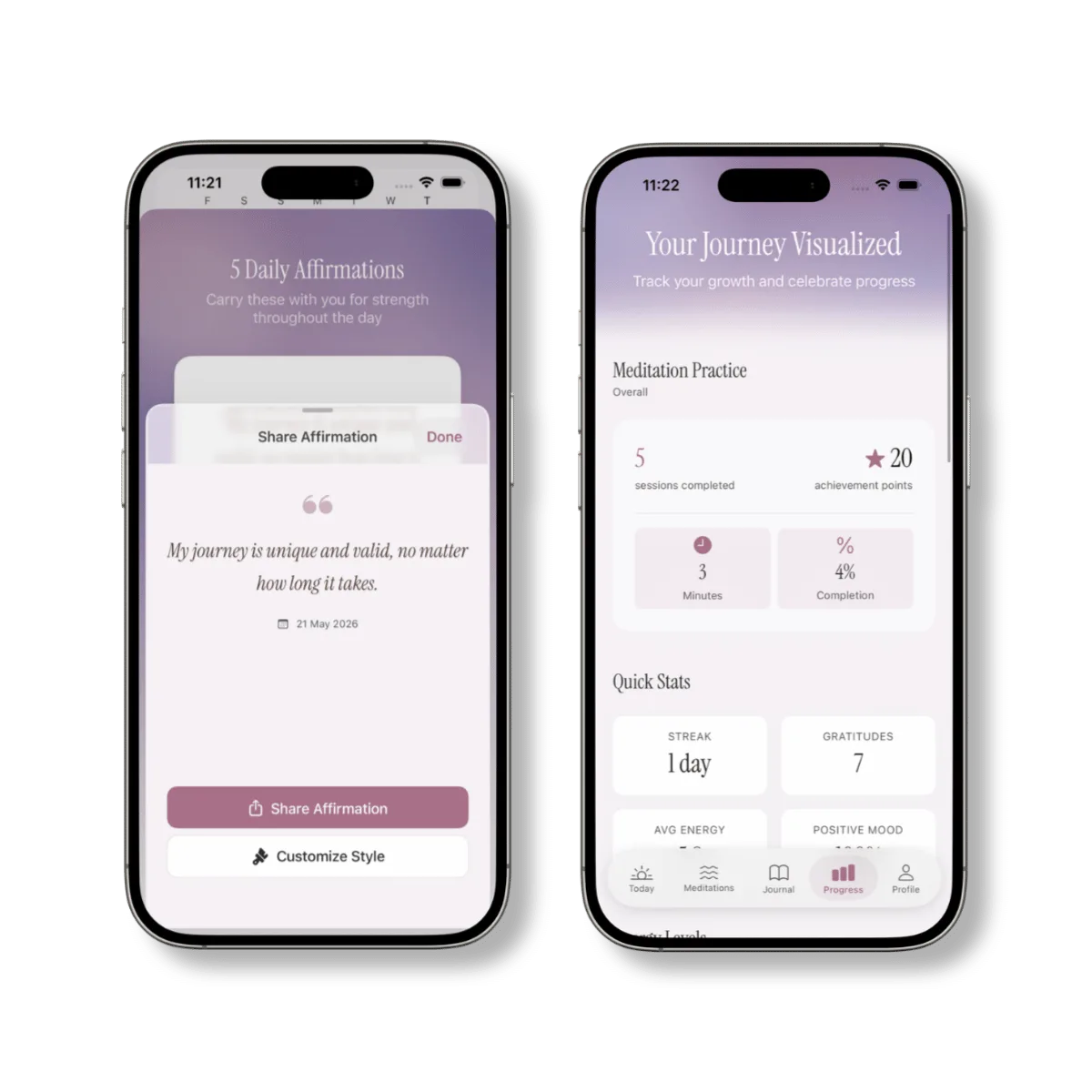
A pregnancy meditation app delivers guided meditation, affirmations, and visualisation practices shaped for where you are in pregnancy. My Maternal Mind is an iOS app that tracks your week from 1 through 42 and into postpartum, generating a fresh daily meditation from your stage, mood, and journal rather than a fixed library.
- Week-by-week content from early pregnancy through postpartum
- Daily AI-personalised meditations, not a static audio library
- Choice-based affirmations that hold uncertainty honestly
- Mood and symptom journaling that shapes what you hear
- Birth preparation and sleep support for the third trimester
Built for the real emotional mix of pregnancy: hope, fear, exhaustion, and everything in between.

Created with a privacy lawyer and parent who has lived trying to conceive, pregnancy, and postpartum.
Grounded in NHS-aligned perinatal guidance and published mindfulness research, including Nancy Bardacke's Mindfulness-Based Childbirth and Parenting programme.
Rated 5 stars by early App Store reviewers
What people are saying on the App Store
Early reviews from people using My Maternal Mind through trying to conceive, pregnancy, and postpartum.
- Trying to conceive through pregnancy
Must Have
Former TTC
“I struggled with some dark thoughts during my TTC journey when a lot of friends and family had success, the meditations kept me grounded during this time and reminded me that each of our journeys are unique and it also helped me remain calm and hopeful! My due date is now 29 November.”
- Pregnancy
Helped us a lot
padvinsu
“We're expecting and use this to help with the anxiety. It really makes it easier when you have guidance!”
- Pregnancy and postpartum
Beautiful UI
MaryOwennn
“Really pretty and soothing app, that brought me so much peace and calm during my pregnancy. Now in post parting, I use it for sleep and it's part of my daily little me moment.”
Reviews quoted from the App Store listing. Wording is unchanged from the original posts.
What makes a pregnancy meditation app actually useful?
A useful pregnancy meditation app matches content to your trimester and week, not just a generic calm track. Research on prenatal mindfulness shows consistent, moderate reductions in anxiety, depression, and perceived stress across multiple meta-analyses. The Mindfulness-Based Childbirth and Parenting programme, developed by certified nurse midwife Nancy Bardacke, has been studied in several trials with improvements in prenatal attachment and mood. Apps cannot replace a nine-week facilitated group programme, but they can make core practices accessible daily. Read our complete guide to meditation during pregnancy.
Trimester-specific need
Week 6 and week 34 are not the same experience. Content should reflect loss anxiety early, body shifts mid-pregnancy, and sleep plus birth fear in the third trimester.
Sleep and third-trimester insomnia
A systematic review found insomnia affects roughly 42 percent of women in the third trimester. Body scans and progressive relaxation before sleep address both physical tension and night-time rumination.
Affirmations that hold uncertainty
Affirmations that acknowledge what you do not know yet tend to last longer than ones that promise a particular outcome. That honesty is a quality marker, not a limitation.
Birth visualisation
Consistent third-trimester practice of breathing, relaxation, and visualisation is associated in hypnobirthing trials with lower childbirth fear and pain scores. Regularity matters more than a single session near your due date.
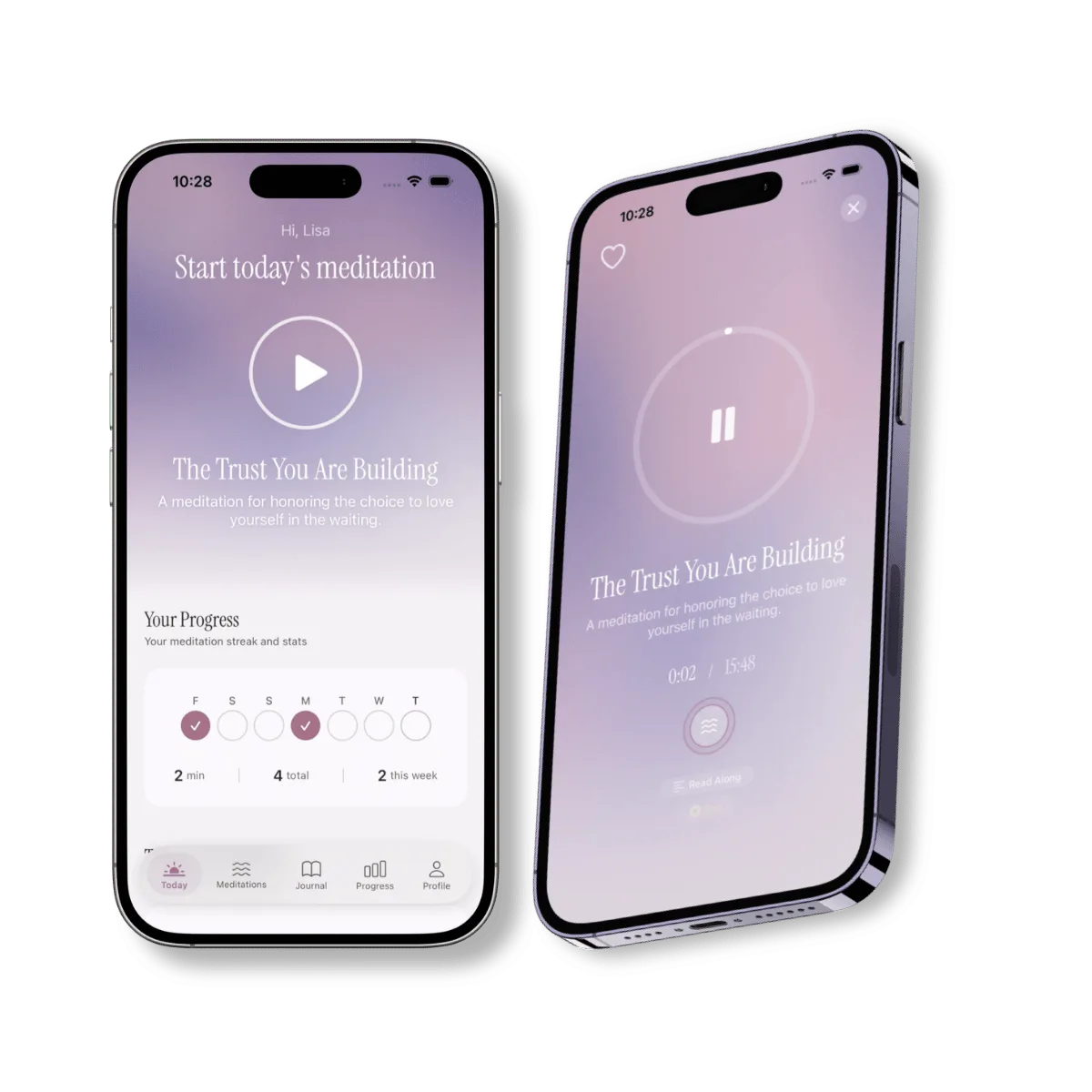
Daily personalised meditations for weeks 1 to 42 and postpartum
Each morning, a new guided meditation shaped by your exact week, mood, and journal entries.
Not a library tagged by trimester: the script is written fresh for your current context, including TTC history carried forward into pregnancy.
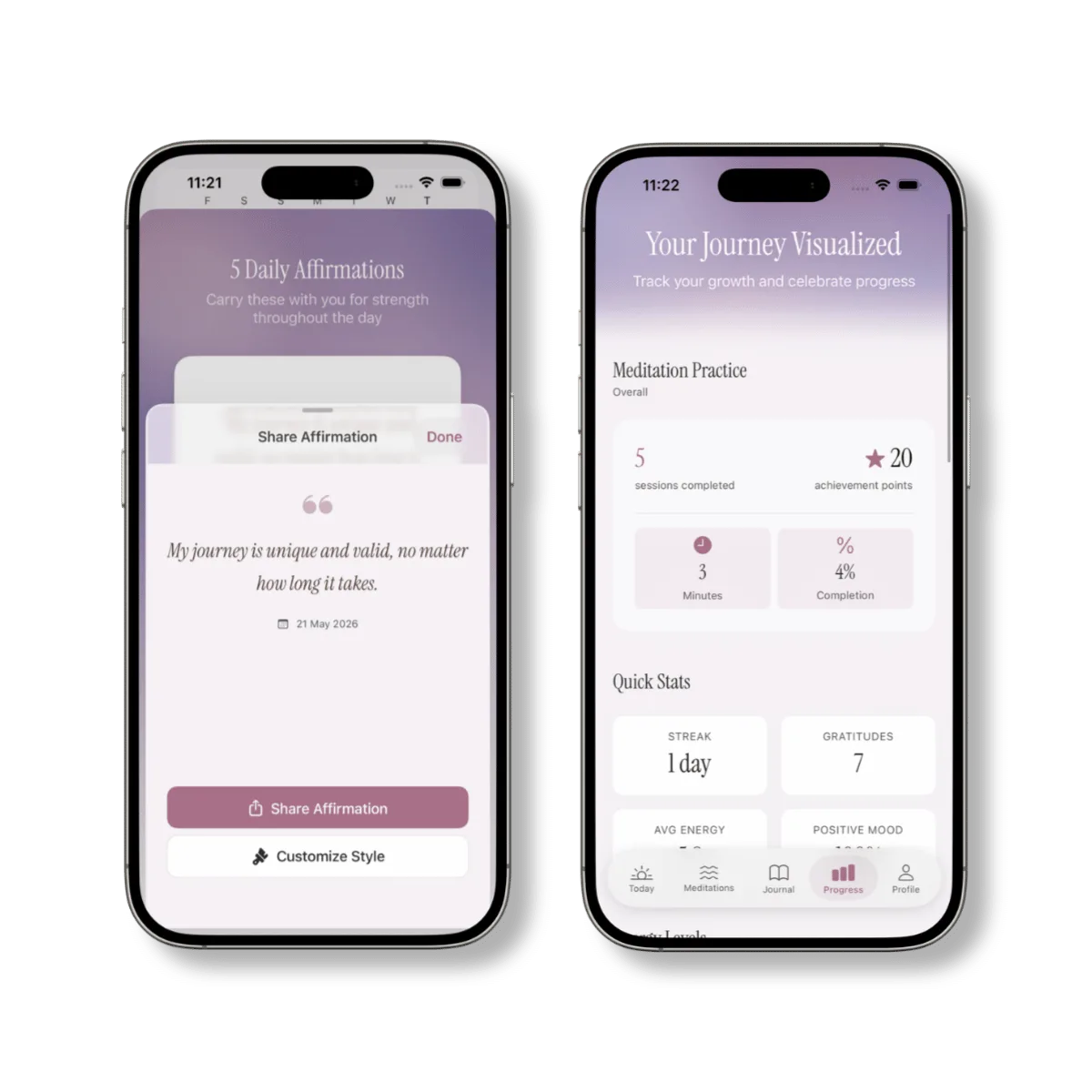
Stage-specific affirmations with choice-based framing
Affirmations drawn from your reflections that acknowledge uncertainty rather than bypass it.
We avoid certainty-promising birth affirmations. We hold the hard parts honestly.
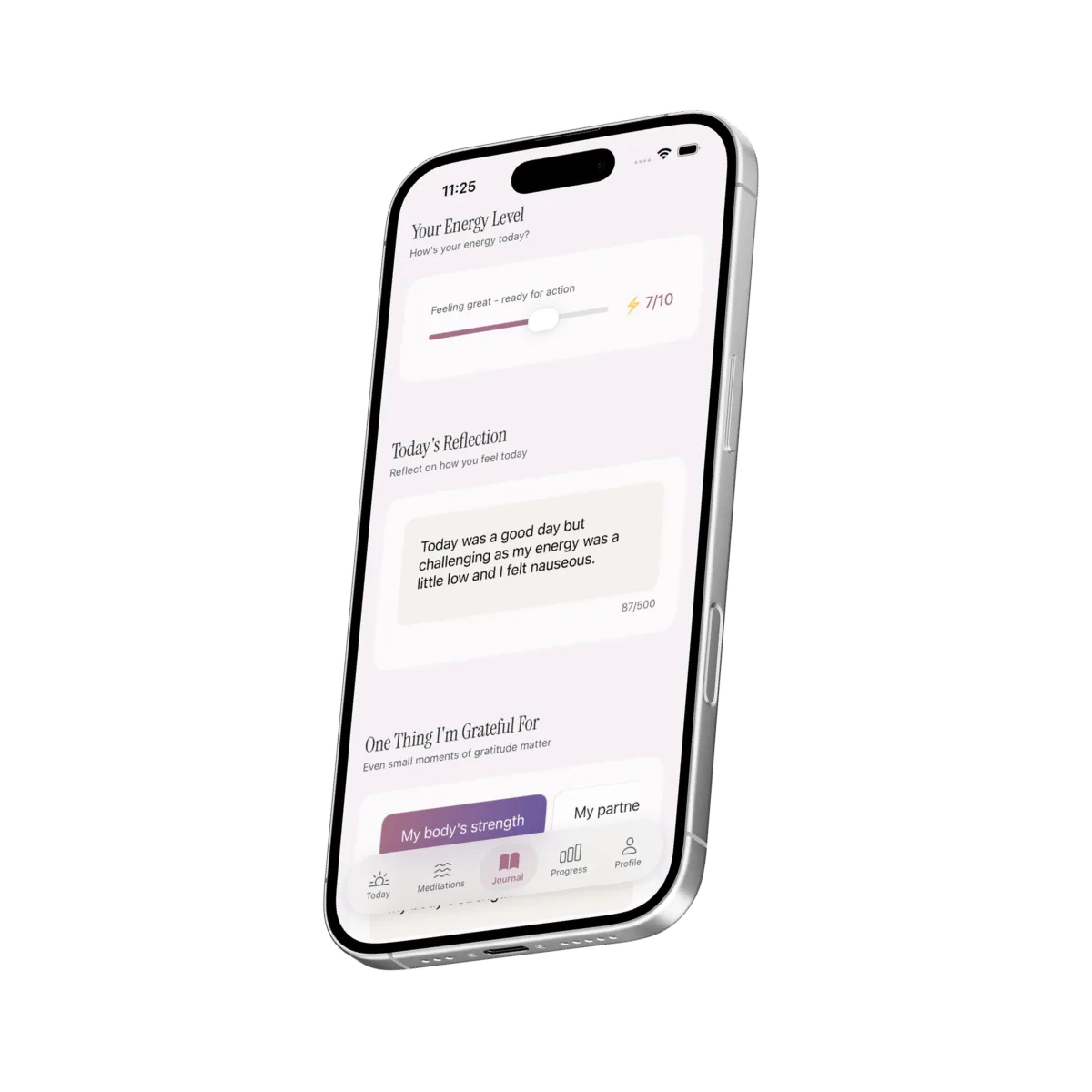
Mood and symptom journaling
A short daily check-in on how you feel, what is weighing on you, and what you want to remember.
Journal context feeds back into meditation and affirmations so support stays closer to what you actually need.
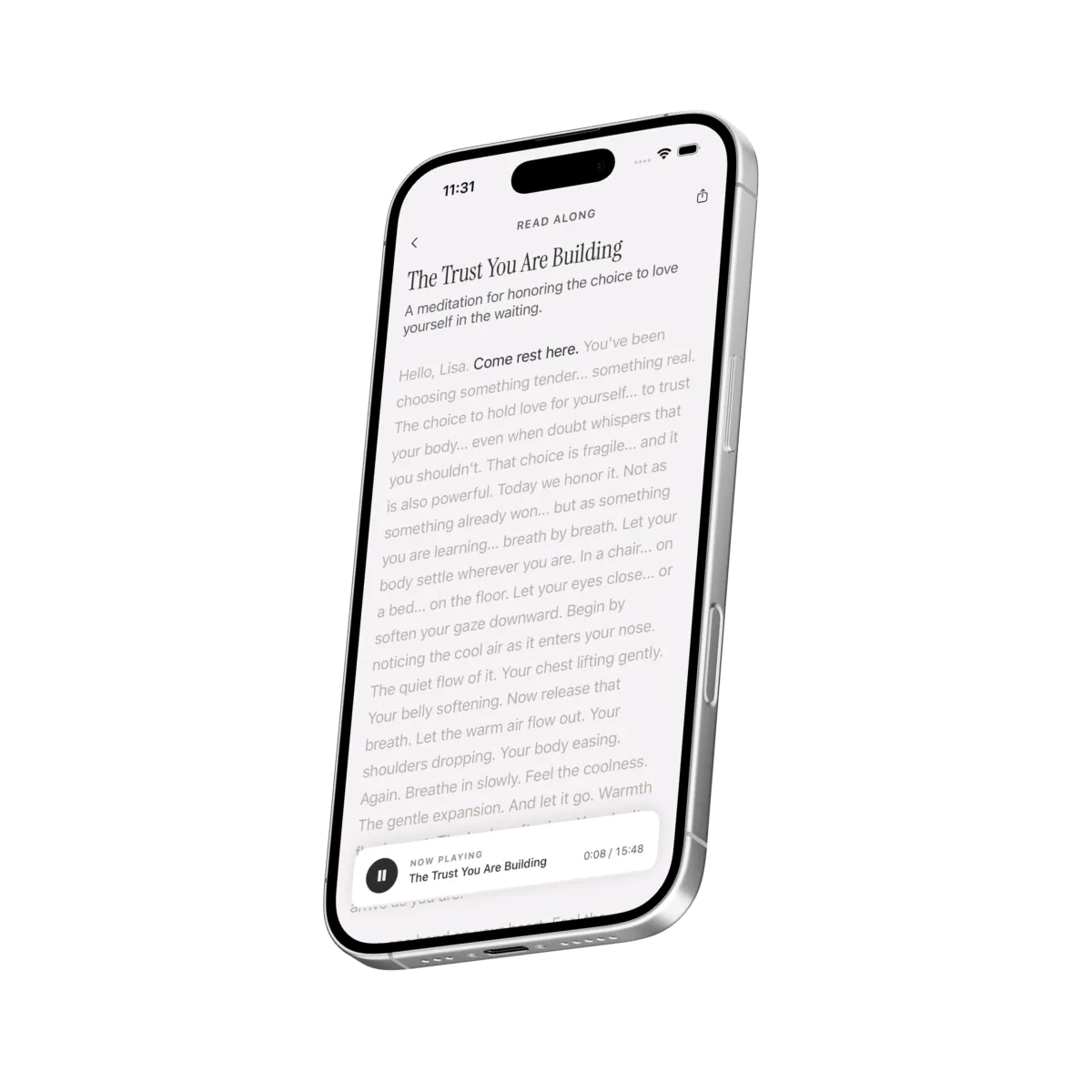
Birth preparation and visualisation
Guided practices that build physiological calm and address birth fear directly.
Designed on mindfulness-based childbirth principles: preparation without outcome guarantees.
Ambient sound mixing, weekly narratives, and Apple Health
Layer gentle sounds under your voice track, receive week-specific journey updates, and sync mindful minutes.
Weekly updates are titled for your stage, for example early weeks and third-trimester thresholds, not generic check-ins.
How My Maternal Mind compares
An honest snapshot for anyone weighing pregnancy-specific apps against general mindfulness tools. We have noted partial where coverage exists but is not week-level or personalised.
| Feature | My Maternal Mind | Expectful | General apps (Calm / Headspace) | Free options |
|---|---|---|---|---|
| Week-by-week structure (1 to 42 plus postpartum) | Yes | Partial | No | No |
| Daily meditation personalised to your journal and mood | Yes | No | No | No |
| Pregnancy-specific content throughout all trimesters | Yes | Yes | Partial | Partial |
| Choice-based affirmations (no outcome promises) | Yes | Partial | Partial | No |
| Integrated mood and symptom journaling | Yes | Partial | Partial | No |
| Birth preparation and visualisation | Yes | Yes | Partial | Partial |
| Free tier to start | Yes | Partial | Partial | Yes |
| UK-grounded clinical sourcing in content | Yes | Partial | No | No |
What the research does and doesn't show
Multiple meta-analyses pooling dozens of randomised trials suggest mindfulness-based interventions during pregnancy are associated with lower anxiety, depression, and perceived stress. Effect sizes are moderate, not dramatic. That is still meaningful clinical evidence, not marketing.
The strongest programme evidence comes from facilitated courses such as Mindfulness-Based Childbirth and Parenting. An app cannot replicate nine weeks of group teaching, partner involvement, and facilitator support. What it can do is make guided practice, body awareness, and breathing techniques available on the days you actually have five minutes.
For third-trimester sleep, body scans and progressive muscle relaxation are among the most practical, evidence-aligned tools. For birth fear, consistent third-trimester visualisation practice shows stronger associations in research than occasional use in the final weeks.
If you experience persistent low mood, panic attacks, intrusive thoughts about harm to your baby, or daily functioning is affected, please speak with your midwife or GP. Antenatal anxiety and depression are common and treatable. Samaritans are available on 116 123, and NHS 111 can advise on urgent concerns.
Frequently asked questions
A pregnancy meditation app provides guided meditation, relaxation, affirmations, or visualisation designed for the emotional and physical reality of pregnancy. Unlike general wellness apps, it should offer trimester-aware content, sleep support for later pregnancy, and language that fits prenatal mental health. My Maternal Mind tracks your week from 1 through 42 and into postpartum, generating daily sessions from your stage, mood, and journal.
Research suggests it may help. Meta-analyses covering many randomised trials report that mindfulness-based interventions during pregnancy are associated with reductions in anxiety, depression, and perceived stress. Nancy Bardacke's Mindfulness-Based Childbirth and Parenting programme has been studied across several trials. Benefits are moderate rather than guaranteed, and apps are a support tool, not a substitute for clinical care when symptoms are severe.
You can start in the first trimester if it feels right for you. Early pregnancy often needs short, accessible sessions because nausea and exhaustion make longer practices difficult. Many people find five to ten minutes before sleep a sustainable entry point. If you have had a previous loss, gentler, uncertainty-aware content in the first trimester may feel more honest than celebration-focused tracks.
Mindfulness meditation is widely considered safe during an uncomplicated pregnancy. Tell your midwife or GP about wellness practices you use, especially if you have a history of anxiety, depression, or trauma. Stop any practice that increases distress rather than relief. Meditation complements clinical care; it does not replace it when you need specialist perinatal mental health support.
General apps offer broad mindfulness libraries, sometimes with pregnancy sub-collections. A pregnancy-specific app should adapt to your week, address trimester-specific concerns such as loss anxiety, body image shifts, insomnia, and birth fear, and use affirmations suited to prenatal mental health. My Maternal Mind also personalises each daily meditation from your journal, which fixed libraries cannot do.
Yes. My Maternal Mind continues into postpartum with stage-appropriate meditations, affirmations, and weekly journey content for the fourth trimester and beyond. The same account can follow you from trying to conceive through pregnancy and early parenthood without switching to a separate product.
Yes. You can download My Maternal Mind free and start with core features before choosing a subscription. Pricing and trial terms are shown in the app and on the App Store listing. A free tier lets you explore whether the voice, pacing, and framing fit you before committing.
Yes. The app includes loss-aware framing in early pregnancy and avoids pressure to celebrate before you feel ready. Affirmations acknowledge uncertainty rather than promising outcomes. If grief or anxiety feels overwhelming, please reach out to your midwife, GP, or a specialist perinatal service. You do not have to manage it alone.
It may help as part of a bedtime routine. Third-trimester insomnia affects a large share of pregnant women, often from both physical discomfort and night-time worry. Body scans and progressive relaxation before sleep target tension and rumination without requiring medication. Ten to twenty minutes consistently tends to work better than occasional long sessions.
It may reduce fear over time with regular practice. Research on hypnobirthing-style self-hypnosis links consistent third-trimester practice with lower childbirth fear and pain scores in some trials. My Maternal Mind addresses birth fear directly in guided visualisation rather than avoiding the topic. Severe tokophobia deserves clinical support from your maternity team, not an app alone.
Built by people who have lived this
My Maternal Mind was founded by Jytte, a privacy lawyer and mother, together with developer Alford Grimbeek. Jytte wrote daily meditations through her own pregnancy, home birth, postpartum return to work, and a later trying-to-conceive journey with PCOS. The app exists because nothing on the market matched that need for honest, week-level support.
Start with a meditation for your week
Download My Maternal Mind free. Your first sessions are shaped by where you are in pregnancy today.